
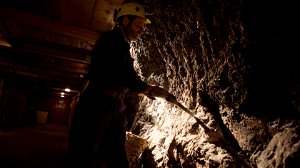
Underground gravity energy storage can transform long-closed mines into an almost inexhaustible source of renewable electricity. That is the message of a report by scientists at the International Institute for Applied Systems Analysis (IIASA), based in Vienna, Austria.
Why is this important?
Renewable sources should ultimately make the world’s energy supply more sustainable. But if we focus on solar and wind energy, these energy sources cannot guarantee a constant level of performance. It is therefore essential that excess energy can be stored for later use. The old mine shafts could be very useful there.Profitability and long term: there are already a number of everyday energy storage solutions, mainly using batteries, but this technology has its limits and is prone to shortages of raw materials to build them.
- However, scientists from the Energy, Climate and Environment program of the International Institute for Applied Systems Analysis point out that there is still no cost-effective long-term solution for this storage.
- To meet this challenge, the team from the Austrian institute has developed a new concept that makes it possible to store energy by storing sand in abandoned underground mines.
- “This new technique – Underground Gravity Energy Storage (UGES) – provides an efficient long-term energy storage solution while creating a new future for the millions of abandoned mines found around the world,” note researchers Julian Hunt and Behnam. . Commercial.
The Austrian system benefits from price fluctuations in the electricity markets.
- The system generates electricity when prices are high by running sand through an underground mineshaft and converting the sand’s potential energy into electricity through regenerative braking.
- When electricity is cheap, electric motors are used to divert sand from the mine to an elevated reservoir to store energy.
- The deeper and wider the mine shaft, the more energy can be stored there.
The researchers note that Useg can also bring significant benefits to the labor market.
- “When a mine closes, thousands of workers are laid off,” Hunt and Zaker note. “This can have disastrous consequences for local communities, which often rely mainly on mining activities for their income. »
- In that respect, according to the scientists, the start-up of Uges could already save a few jobs.
In addition, the mines already have basic infrastructure and these sites are also connected to the electricity grid. This reduces the implementation costs of the Uges system. - “Other methods of storing electricity, such as batteries, run the risk of losing energy due to self-discharge over long periods of time,” Hunt and Zaker point out.
“However, the storage medium for Uges is sand. In this case there is therefore no risk of energy loss due to self-discharge. This makes energy storage for longer periods – from a few weeks to several years – possible. » - Scientists estimate that this technology has a global potential of 7 to 70 terawatt hours. Most of this potential is concentrated in China, India, Russia and the United States.
“Decarbonising the economy requires us to rethink the energy system based on innovative solutions that use existing resources,” say Hunt and Zaker. “Turning abandoned mines into energy stores is one example of the many solutions that exist around us. Only the use needs to be adjusted so that a new activity can be realized. »
MB
Source link
Commentaires
Enregistrer un commentaire