
What if charging an electric car is cheaper than we imagine? The free fees are still around at the beginning of 2023, but they are becoming increasingly exceptional. Let’s take stock of these rare pearls that let you ride without paying.
Electric cars are much cheaper on a daily basis than their thermal counterparts. In fact, the cost of an electric car per kWh in the home is about 0.174 euros, and often 100 kilometers of an electric car costs less than three euros. For a gasoline-powered car to be competitive, it must consume fuel Less than two liters per 100 kmIt is a waste of time.
On longer trips, as we regularly highlight, the bill can add up exponentially due to express charging at much higher rates, up to four times more expensive than home. What if we told you that there are ways to drive electric even for less, or even for free? Let’s see what it is.
Express shipping is very expensive
Crossing France in an electric car is not very cheap today. Indeed, taking into account the average consumption on the highway at 20 kWh per 100 km, The price per 100 km varies between 12 and 15 euros, depending on the freight networks used. We also have a file that summarizes the major networks and their specifics.
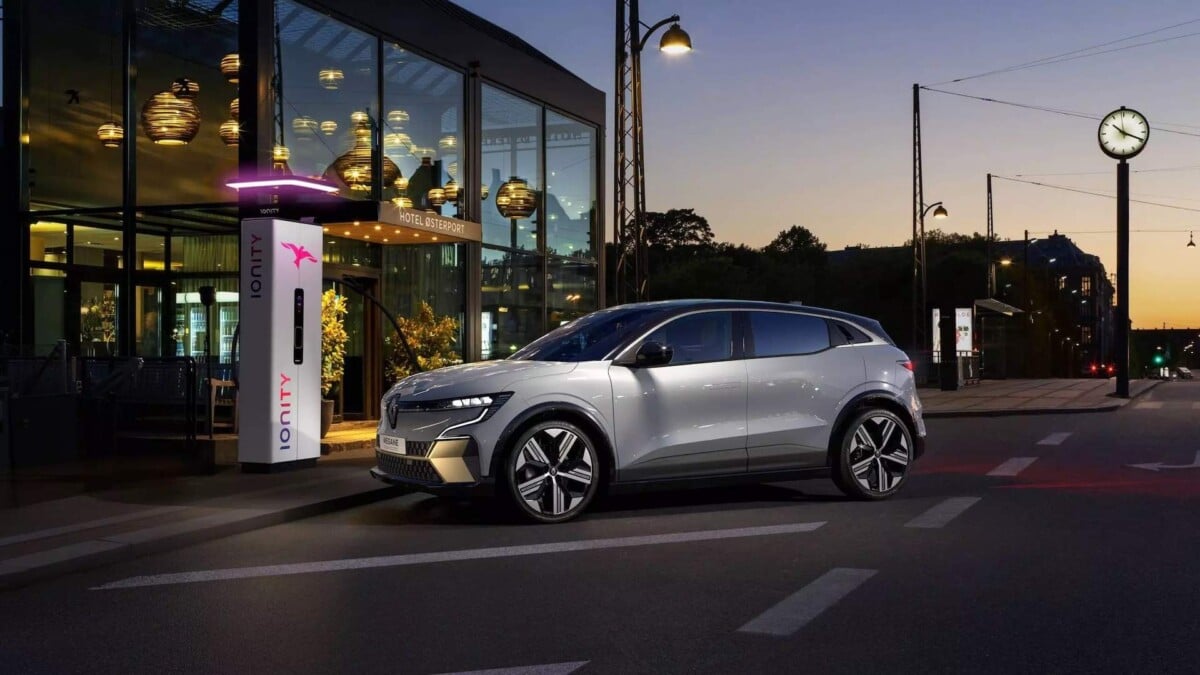
One of the leaders in this sector, Ionity, for example, now offers charging at €0.69 per kWh. To fill a classic electric car (Tesla Model Y Propulsion, Kia EV6 58 kWh or Renault Mégane e-tech) with From 10 to 80% it costs the customer approximately 30 euros. The same operation at home will cost only 7 euros, less than a quarter of the price.
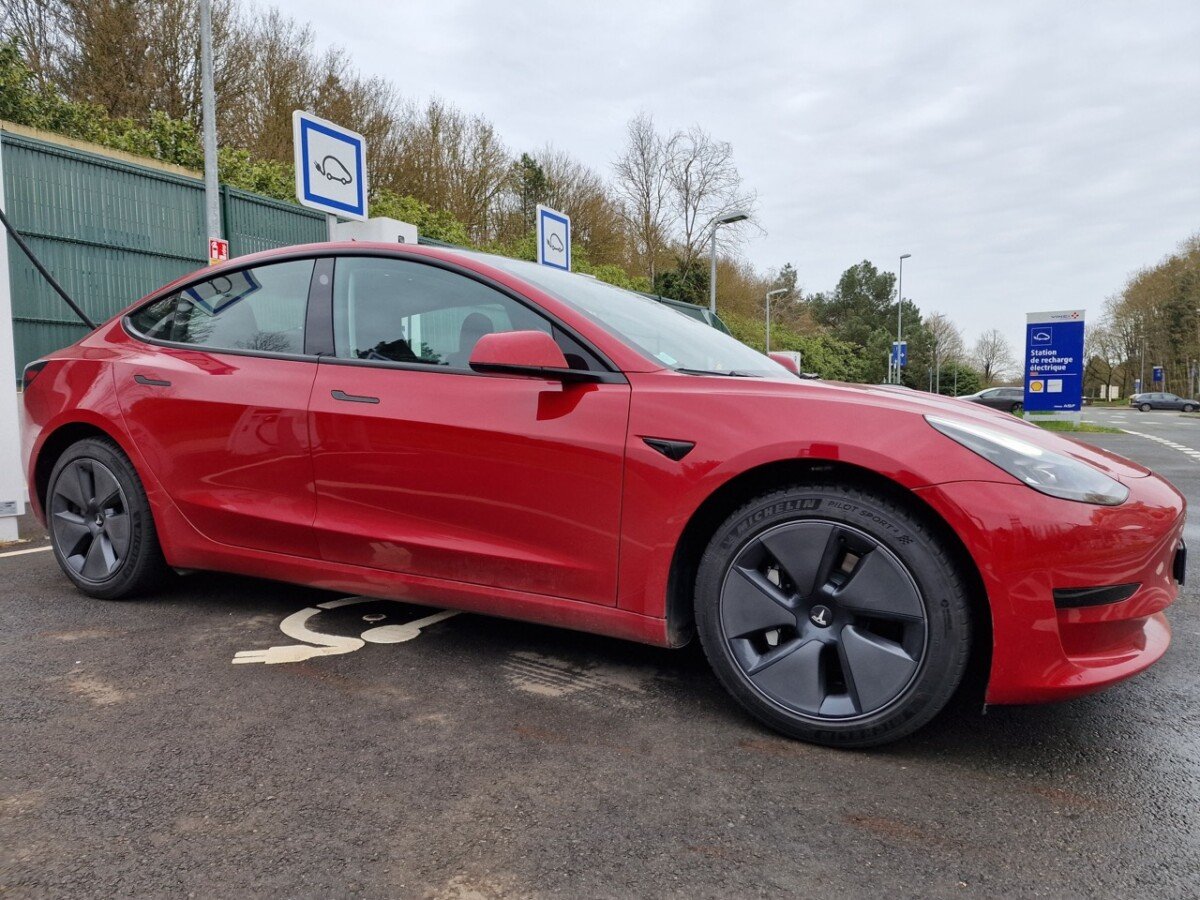
This huge difference in price depending on where you charge is very specific to electric mobility, and are not found in similar proportions in a thermocouple. Of course, some gas stations are more expensive than others, but in no case will there be three to four times more gasoline in certain places.
Fortunately, such high-cost fast shipping is not inevitable and, above all, remains very rare. The vast majority of electric vehicle users have an average cost per 100 kilometers of less than three euros, thanks to the many charges at home, at work or elsewhere that are potentially less expensive.
Shipping is free, which is a feature that tends to disappear
Are there only shops, parking lots or other places that provide liters of petrol for vehicles that are parked there? However, this is still the reality of electric mobility in 2022, with many brands using it Free charging stations to encourage customers to come to.
Of course, this is not a system, but as the owner of an electric car, you must admit that it is always interesting to be able to top up the battery for free. Some malls offer a few free charging stations, and while it’s not fast, the appeal is very real.
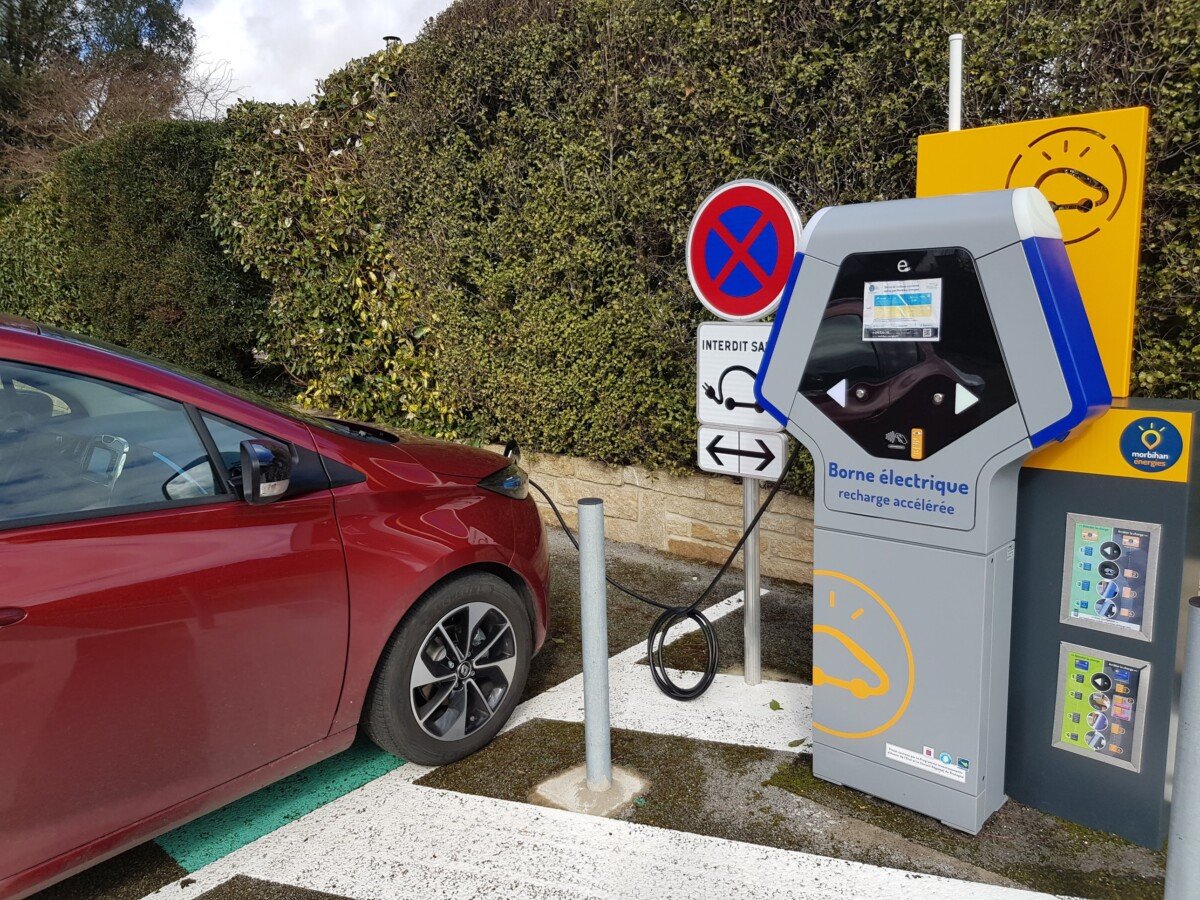
Most of them are AC charging stations, with a capacity of 7, 11 or 22 kW. Concretely, this means thatIn one hour of charging it recovers enough to travel between 50 and 150 kilometers. For shopping centers where you can easily spend several hours, it is very likely that you can fill the battery completely.
An electric motor that travels 1,000 kilometers a month, charging twice a month at a free charging station, will cut its cost per 100 kilometers in half! Indeed, with a consumption of 20 kWh per 100 km, it takes 200 kWh to travel 1,000 km. Two free 50 kWh (that’s 100 kWh) top-ups already represent a 50% savings, reducing the cost from €3.4 to €1.7 for 100 km.
So the main problem is the following: How can these free charging stations be recognized and used intelligently, and where can they be found?
Exceptions still exist
Spread the word: Don’t imagine traveling on the highway and arriving at a station that charges you for free. This scenario practically does not exist, although in rare exceptions it happens that the station’s Ionity station is free on scheduled dates. When this is the case, it is only because the latter is defective and is charging slowly. It is also reported as such in the Ionity app.
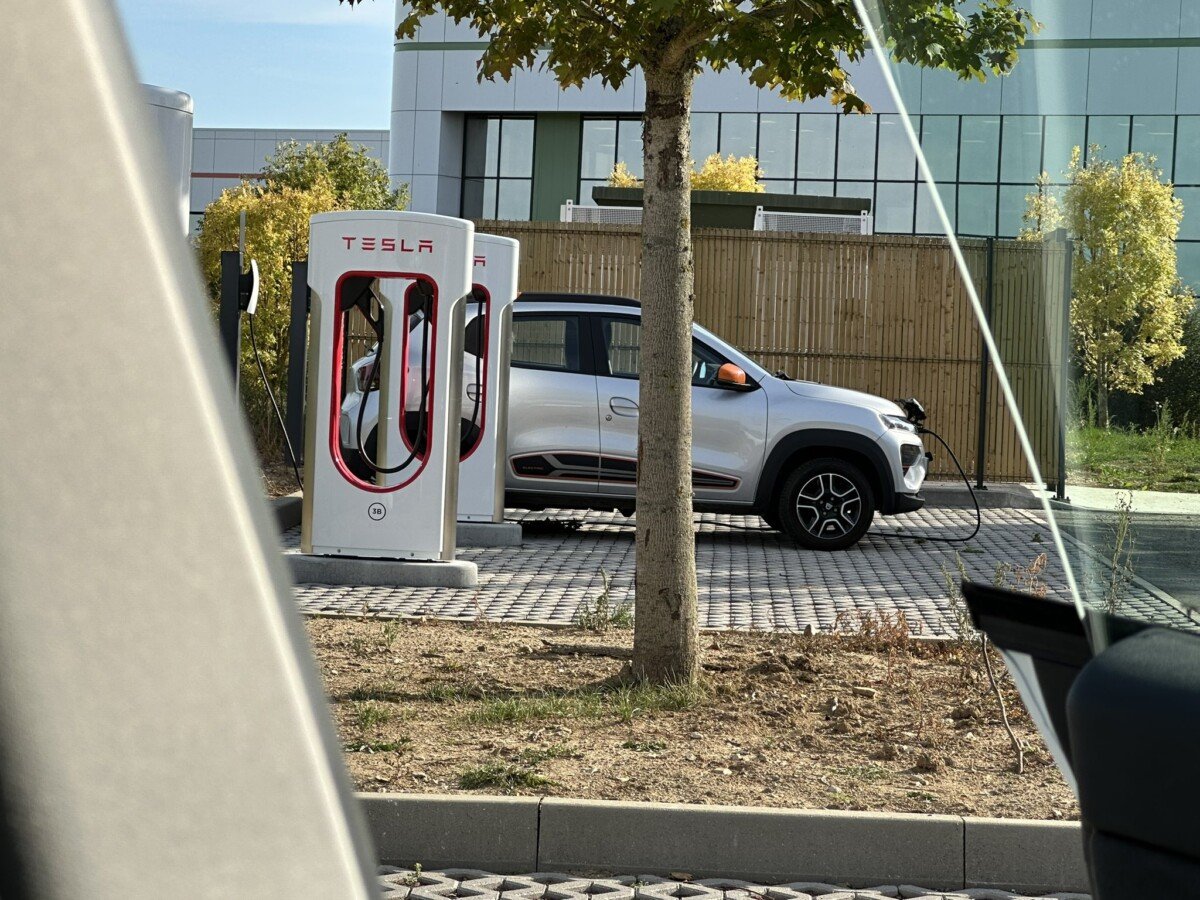
What is more common are Free charging stations in the shopping center car parks. The rules aren’t always the same, however It is not uncommon to be able to hook up “by eye” for several hours. Among the terminals that allow this, we find chargers for Tesla, which are located next to certain superchargers, as is the case Near Troyes, Tours or in Sallanches.
In addition to Tesla’s multiple fast chargers, there are up to three slow charging stations (the famous Tesla wall connector) with a cable connected, so You don’t need your cable to enjoy it. They Compatible with all electric vehicles with a Type 2 socket, It is currently not chargeable. This is what the Dacia spring does, for example, pictured in one of the articles.
Other station operators use a different strategy, as does Driveco, which sometimes leaves a The first 30 minutes are free in certain places. After this grace period, administrators start paying, but there is a trick some people use to avoid having to pay. It is possible to disconnect after 29 minutes of charging and recharge by stepbut that means returning to your car frequently, which is restrictive and against the spirit of this free charge.
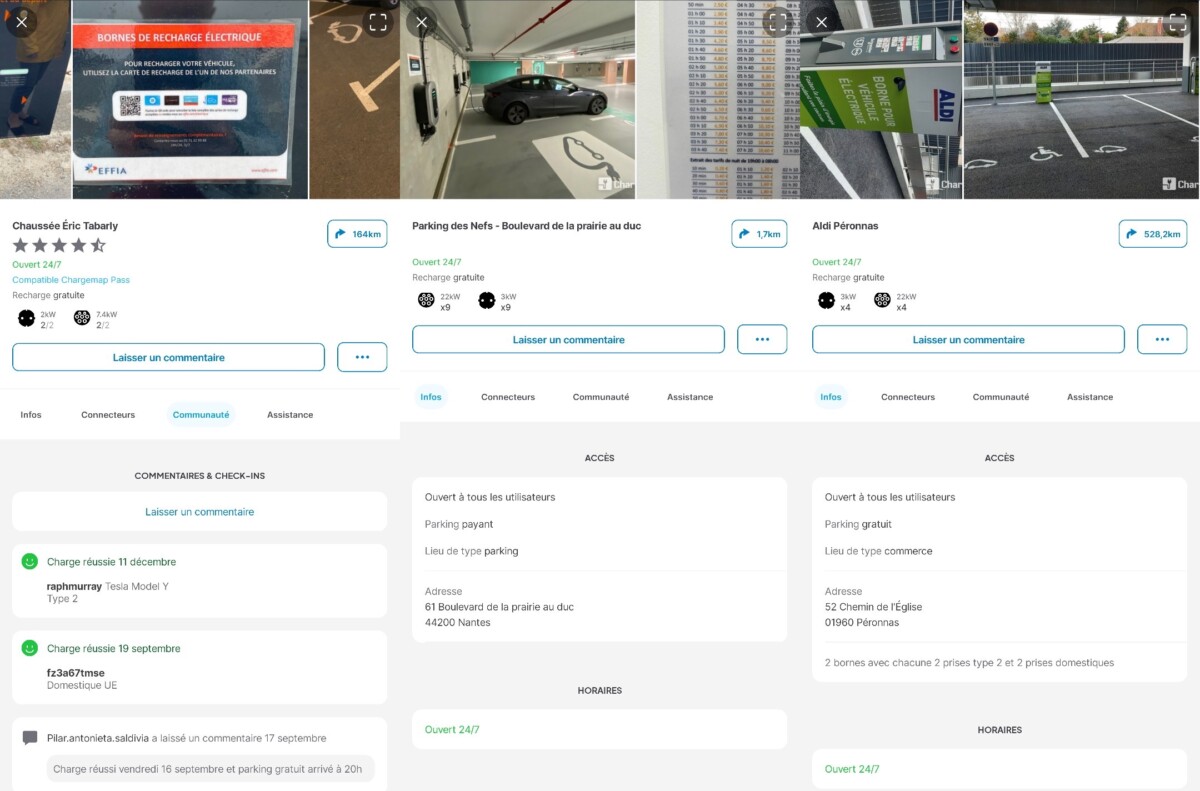
One of the most efficient ways to find free charging locations is to use the excellent Chargemap app, where you can locate free stations. And so you will find Supermarkets, shopping malls, city parking lots or even hotels Let you spend time charging without spending a single penny. Feel free to check your usual parking spots if the stops are available for free, because It probably won’t last forever…
The future of shipping will generally be more expensive
Nobody can miss The energy crisis currently affecting EuropeWhere electricity prices have reached record levels. Although there is a price shield aimed at protecting individuals in France, it is necessary to imagine the future of electric mobility as payment, with some very rare exceptions.
Apart from the purely financial aspect associated with the current increase in energy prices, Free fees increase the risk of compounding “opportunistic” fees., punishing those who really need to be charged. Actually, Who would refuse to give him a few tens of kilometers of additional autonomy, even without it being necessary? If it is enough to stand in a place where there is a free terminal, many will benefit from it.
This is a behavior we observe on a daily basis. When the stations are paid, there is little abuse, while when the stations are free, some do not hesitate to stay in touch with them more than why. Station operators keep this in mind, and they know it Those most desperate to collect fees will be willing to pay. But for now, the few places that continue to offer free charging are a rare find for EV drivers.

According to a report by France Strategy, an electric car is much cheaper than a thermal car. And this is even if the purchase price was higher and electricity increased in the past…
read more

Build Frandroid’s future with us by answering these questions!
Commentaires
Enregistrer un commentaire